Saturday, October 16, 2021

Sawanoi - A Sake Brewery in Tokyo

Tokyo may not be among Japan's top sake producing regions, but it does have several sake breweries in the suburbs that are accessible from the center of the metropolis.    

One of them, Sawanoi is in the Okutama area and sits along Tama River.  The sake brewer was established in 1702, nearly 320 years ago.  It has a longer history than many Champagne maisons in France! 
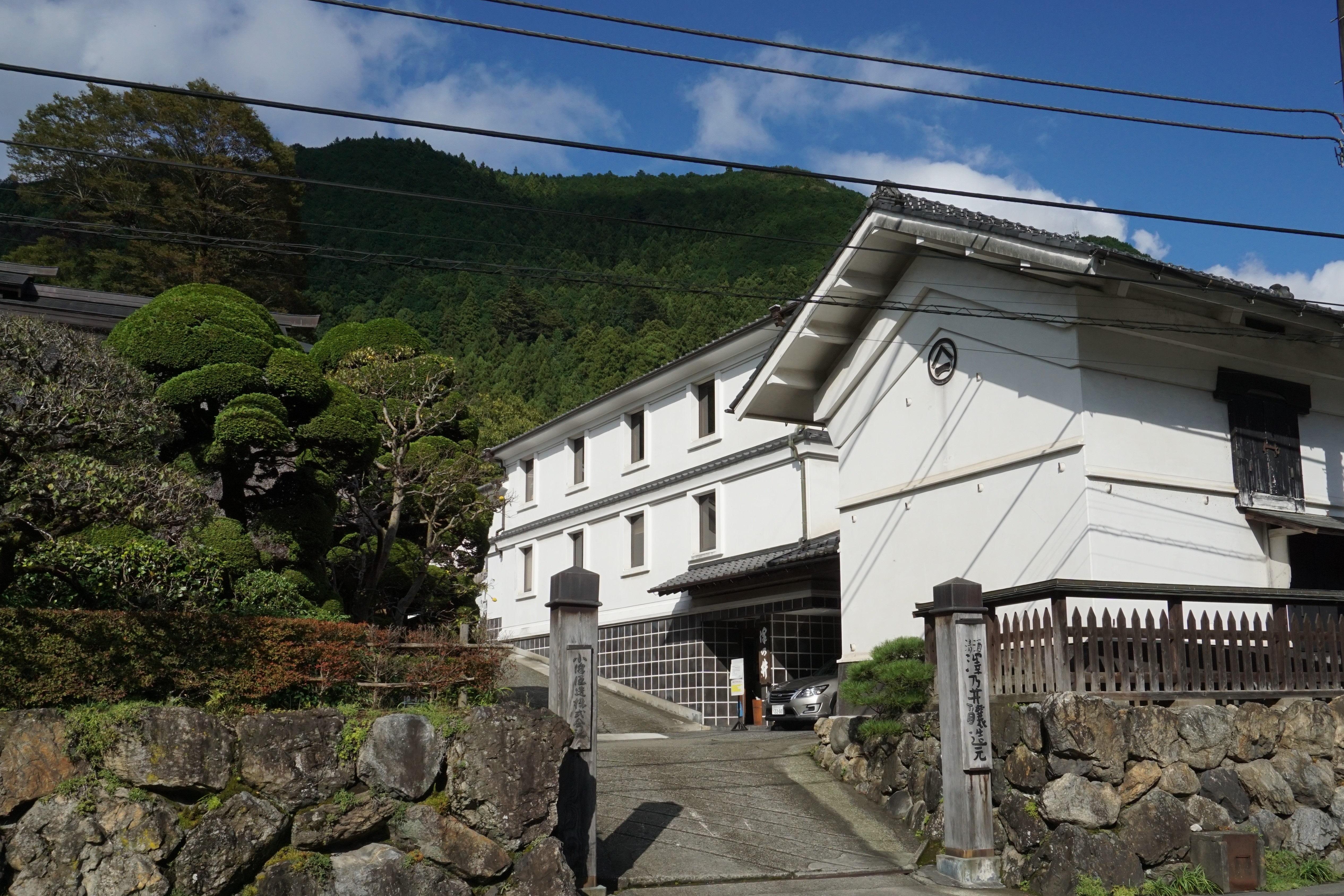
If you walk from the nearby Sawai Station, you will notice a slight sweet aroma of malt in the air.  Your journey into the sake world has already begun. 

The Sawanoi Garden complex includes restaurants, shops and a tasting bar, but what is likely to get your attention first is the clear water stream down the slope.  Good sake requires good water.  At this privileged location, you can soak in the beautiful scenery of the river surrounded by mountains, and can even enjoy a hike along the trail.  

The sakagura (sake factory) tour is provided free of charge and requires pre-booking as of Oct. 2021.  The guide leads a small group into the factory.  There are no windows that would let sunlight in, and it feels a little cooler than outside. You may recall wine or Champagne cellars.   Some huge tanks hold over 8,000 litters of sake each.  

The mother water is taken not direct from the ample river water but from the natural well deep inside a cave.   Slowly coming out through the thick ancient bedrock, the spring water is rich in minerals.  

Though most sake is sold and consumed fresh, here they also have aged sake.  Some are over 20 years old.  The vintage sake is amber colored and has a unique aroma.  


Visit the tasting bar after the tour.  They serve 10 different kinds of sake including their signature daiginjo "Koh" and the aged "Kuramori" (selection may change.)   


It takes only 1.5 hours of train ride from central Tokyo.   A pleasant day trip to fully enjoy both nature and good drink.  


Friday, October 8, 2021

Rikugien Garden

Rikugien Garden is another magnificent Japanese garden in Tokyo.  It was built by Yoshiyasu Yanagisawa, a retainer of the 5th Tokugawa Shogun Tsunayoshi, and took 7 years to build at the turn of the 17th and the 18th centuries.  

The garden is a short walk from Komagome Station.  It has a pond in the center surrounded by trees and walking trails.  Like many other gardens built by daimyo (local lords) of the Edo period, it represents a natural mountain scenery condensed in the premises.  

The large weeping cherry tree near the entrance gate bears beautiful pink blossoms in spring.  The picture is featured on the entrance ticket. 


Walking along the trail, you will encounter a small waterfall as if you found it deep in the mountain.  

It is recommended that you stop at the Fukiage tea house along the pond and appreciate the view, sipping matcha green tea and tasting traditional sweets.   

Aside from the cherry blossom season, autumn is also a great time to visit the garden for the beautiful colored leaves.  At the time of my visit early October, some leaves were just starting to turn red.  

From the corner called Deshio-no-Minato, you can view the whole garden with no modern buildings in sight. 

The garden is a perfect place for a short walk and a trip into a small isolated universe.  


Wednesday, July 7, 2021

The Wood Carvings of Shibamata Taishakuten Temple

Shibamata is an neighborhood at the eastern edge of Tokyo.  It is known as the hometown of a 20th-century movie character "Tora-san" and has a nostalgic atmosphere that remains unchanged for decades.  

By walking along the main street lined with traditional "kusa dango" (tansy sweets) shops, you will arrive at the Shibamata Taishakuten Temple.  


Also called the "temple of carvings," Taishakuten boasts numerous fine wood carvings that wrap around the architectures.  The "Chokoku (carving) Gallery" presents a series of artworks carved on ten thick cypress boards, narrating Buddha's teachings.  The carving works are so detailed that they look deeper than they really are, and vivid without any coloring. 
   

The admission fee to the Chokoku Gallery also gives you access to the Suikeien Garden.  You will walk along the corridor that surrounds the garden.  

A nice short trip from the center of the metropolis for a change of pace.  


Saturday, July 3, 2021

Higo-Hosokawa Garden

In Tokyo's quiet Mejirodai neighborhood lies the Higo-Hosokawa Garden.  It is a public garden managed by the local municipality.  It used to belong to different samurai families during the Edo Period and the last owner was the Hosokawa family from Higo (current Kumamoto Prefecture,) hence the name. 


The traditional-styled garden has a large pond in the center surrounded by hills and walking trails.  It uses the changes of elevation to represent real mountains, creating a downsized natural scenery.  You would also find spring water along the trails and wonder if you are hiking in a mountain of some countryside.


Admission to Higo-Hosokawa Garden is free.  It is close to Hotel Chinzanso Tokyo and St. Mary's Cathedral.  In spring, the adjoining Kanda River will be lined with cherry blossoms creating a lovely promenade for a walk, but the garden has its charm for all seasons.  

photos taken in April 2021


Friday, July 2, 2021

St. Mary's Cathedral by Kenzo Tange

St. Mary's Cathedral is in Bunkyo Ward, Tokyo and is in walking distance from the subway Gokokuji Station.  The neighborhood is surrounded by a number of schools and universities.  It is also close to the Higo-Hosokawa Garden that used to belong to a feudal lord family.  

The cathedral was designed by the late architect Kenzo Tange and was built in 1964.  It does not look like any other church.  No cross is attached but the building itself is cross-shaped.  You will see it once inside.  

The interior of the cathedral is simple, dark and solemn, looking even like a secret fort.  When you look up, you will see a cross-shaped top light and realize that you are in a church.  Photography is not allowed inside, so please visit the cathedral yourself and see the futuristic architecture.  


Thursday, July 1, 2021

The Imperial Palace and the Lotus Moat

Amid the rain season in Tokyo, a walk along the Imperial Palace moat turned out to be a imaginary exploration into a lush exotic forest. 


The water is covered by pink lotus flowers and green algae carpets.  


The narrow sidewalk is lined with willow trees swaying in wind.  The paved surface is often uneven and bumpy because of the tree roots pushing up from under the ground.    


 Summer is around the corner.  


Tuesday, December 15, 2020

Old Mitsui Family Shimogamo Villa

If you feel like seeing something historic in Kyoto but not temples, shrines or castles, the Old Mitsui Family Shimogamo Villa is an option.  It sits in the south of the Shimogamo Shrine. 

The three-story wooden villa shows a good example of classical Japanese residence built by a wealthy family in the Meiji and Taisho eras.  The main part of the building dates back to 1880 and was moved to the current location when the villa was built in 1925. 

A watchtower is located on the 3rd floor  It is normally closed and is occasionally opened to the public for a limited time.  The stairs to the watchtower are so narrow and steep that you need to hold on to the rope.  The watchtower overlooks the garden that has a gourd-shaped pond, and also commands a view of the Higashiyama mountains.  The views must have provided an important essence of luxury to the life in the villa.    


Seen from the front the house is 3-stories, but from the side it looks 4-stories due to the small space between the 2nd floor and the watchtower.  

A place that gives a flavor of elegance of the early 20th century.